
The year 2025 has marked a pivotal chapter in humanity's quest to reach Mars, with both NASA and SpaceX announcing groundbreaking developments that bring the dream of human exploration of the Red Planet closer to reality than ever before. For decades, Mars has captivated the imagination of scientists, engineers, and the general public as the next frontier in human space exploration. Now, with advances in rocket technology, life support systems, and in-situ resource utilization, the technical barriers to sending humans to Mars are being systematically overcome. This article provides a comprehensive overview of the latest Mars mission developments from NASA and SpaceX, the technological innovations making these missions possible, the challenges that remain, and the broader implications of human Mars exploration for science, technology, and human civilization.
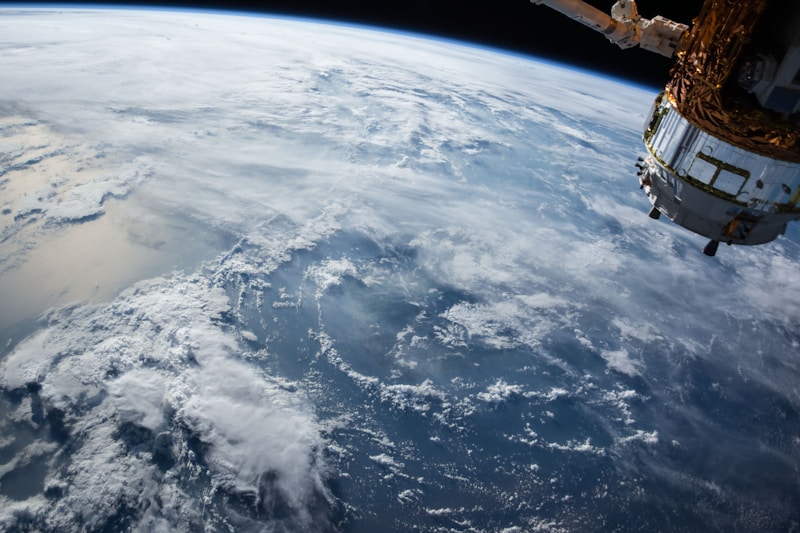 |
| Space exploration reaches new heights as NASA and SpaceX collaborate on ambitious Mars mission plans. (Image: Unsplash - Free to Use) |
SpaceX Starship: The Vehicle That Could Change Everything
At the heart of humanity's Mars ambitions is SpaceX's Starship, the most powerful rocket ever built and the vehicle that Elon Musk believes will carry humans to Mars within the next decade. In 2025, SpaceX achieved several critical milestones with Starship, including successful orbital flight tests, precise landing demonstrations, and the first successful in-orbit refueling operation. The Starship system consists of two stages: the Super Heavy booster, which provides the initial thrust needed to escape Earth's gravity, and the Starship spacecraft itself, which serves as both the upper stage and the crew or cargo vehicle. Standing at nearly 120 meters tall and capable of carrying over 100 metric tons to low Earth orbit, Starship represents a quantum leap in launch capability compared to any previous rocket. The successful in-orbit refueling demonstration was particularly significant, as multiple refueling operations will be required to provide a Mars-bound Starship with enough propellant for the six-month journey to Mars and the return trip home. SpaceX has announced plans to send an uncrewed Starship to Mars during the 2026 launch window, which would serve as a pathfinder mission to test landing systems and begin pre-positioning supplies for future crewed missions.
NASA's Artemis Program and the Road to Mars
While SpaceX is developing Starship with a focus on rapid iteration and cost reduction, NASA continues to advance its own Mars exploration strategy through the Artemis program. Originally designed to return humans to the Moon, the Artemis program is increasingly being positioned as a stepping stone to Mars. NASA's plan envisions using the Moon as a proving ground for technologies and capabilities needed for Mars missions, including advanced space suits, habitation modules, power generation systems, and resource extraction techniques. The Lunar Gateway, a small space station in orbit around the Moon, will serve as a staging point for deep space missions and a testbed for life support systems that will need to sustain astronauts on the much longer journey to Mars. In 2025, NASA announced the selection of crew members for Artemis IV, which will be the first mission to dock with the Lunar Gateway, and unveiled preliminary designs for a Mars Transit Vehicle that would carry astronauts on the approximately six-month journey between Earth and Mars. NASA has also expanded its partnership with SpaceX, awarding a contract for Starship to serve as the human landing system for both lunar and potentially Mars missions, creating a collaborative approach that leverages the strengths of both organizations.
Technological Innovations Enabling Mars Exploration
Several critical technological innovations are making human Mars missions increasingly feasible. In-situ resource utilization (ISRU) technology, which involves using resources found on Mars to produce essential supplies, has made significant progress. NASA's MOXIE experiment on the Perseverance rover successfully demonstrated the production of oxygen from the Martian atmosphere, which is primarily composed of carbon dioxide. Scaling up this technology could provide breathable air and oxidizer for rocket propellant on Mars, dramatically reducing the amount of supplies that need to be transported from Earth. Advanced radiation shielding materials are being developed to protect astronauts from the harmful cosmic radiation and solar particle events they will encounter during the long journey through deep space and on the Martian surface. New life support systems capable of recycling water and air with extremely high efficiency are being tested aboard the International Space Station, and closed-loop agricultural systems that could provide fresh food for Mars crews are being developed in laboratories around the world. Nuclear thermal propulsion technology, which could significantly reduce travel time to Mars from six months to as little as three months, is also being actively researched by NASA and the Defense Advanced Research Projects Agency.
The Human Factor: Health Challenges of Mars Missions
Beyond the engineering challenges, sending humans to Mars presents significant medical and psychological challenges that must be carefully addressed. The extended duration of Mars missions, which would last at minimum two to three years including travel time and surface stay, will expose astronauts to prolonged microgravity, which causes bone density loss, muscle atrophy, cardiovascular deconditioning, and vision problems. Cosmic radiation exposure increases the risk of cancer and could cause cognitive impairment. The psychological challenges of isolation, confinement, and the vast distance from Earth, where communication delays of up to 24 minutes each way make real-time conversation impossible, will test the mental resilience of even the most highly trained astronauts. NASA and international space agencies are conducting extensive research into these health challenges, developing countermeasures including exercise regimens, pharmaceutical interventions, and psychological support strategies. The crew selection process for Mars missions will emphasize not only technical competence but also psychological stability, adaptability, and the ability to function effectively as part of a small, isolated team for extended periods under extraordinary stress.
The Broader Implications of Mars Exploration
The pursuit of Mars exploration extends far beyond the technical achievement of landing humans on another planet. It represents a fundamental expansion of human civilization beyond Earth, with profound implications for science, technology, philosophy, and the long-term survival of our species. Scientifically, Mars exploration could answer one of the most fundamental questions in human history: whether life exists or has ever existed beyond Earth. The discovery of even microbial life on Mars would revolutionize our understanding of biology and our place in the universe. Technologically, the innovations developed for Mars missions will have wide-ranging applications on Earth, from advanced medical technologies to sustainable energy systems and environmental monitoring capabilities. Philosophically, becoming a multi-planetary species would fundamentally alter humanity's relationship with the cosmos and provide a degree of insurance against existential risks such as asteroid impacts, pandemics, and nuclear conflict. As we stand on the threshold of this extraordinary endeavor, the developments of 2025 remind us that the dream of reaching Mars is no longer a distant fantasy but an achievable goal that is rapidly approaching reality.