
The world is in the midst of a renewable energy revolution that is fundamentally transforming the global energy landscape. In 2025, solar and wind power have reached unprecedented levels of deployment, with renewable energy sources now accounting for more than 40 percent of global electricity generation for the first time in history. This remarkable milestone reflects decades of investment, technological innovation, and policy support that have driven down the cost of clean energy to levels that make it not only environmentally beneficial but also economically superior to fossil fuels in most markets around the world. From vast solar farms in the deserts of the Middle East and North Africa to massive offshore wind installations in the North Sea and along the coasts of East Asia, the clean energy transformation is accelerating at a pace that has exceeded even the most optimistic projections from just a few years ago. This article examines the current state of the global renewable energy revolution, the technological advances driving it, the economic implications, the challenges that remain, and what the future holds for clean energy worldwide.
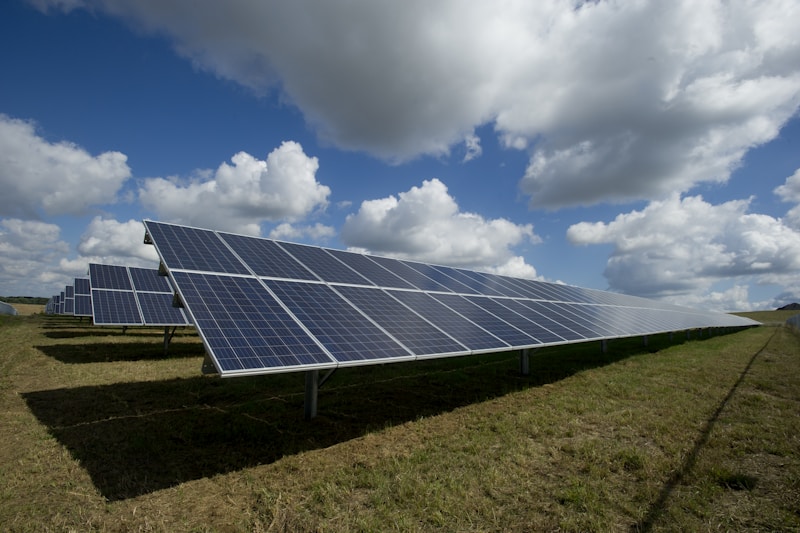 |
| Solar and wind power installations are reaching record levels worldwide as the renewable energy revolution accelerates. (Image: Unsplash - Free to Use) |
Solar Energy: Exponential Growth and Falling Costs
Solar energy has emerged as the fastest-growing energy source in human history, with global installed capacity surpassing 2,000 gigawatts in 2025. The cost of solar photovoltaic panels has plummeted by more than 99 percent since the 1970s and continues to decline, making solar electricity the cheapest source of energy ever produced in many parts of the world. China leads global solar deployment, having installed more solar capacity in the past three years than the rest of the world combined, driven by massive government investment and a dominant position in solar panel manufacturing. India has also emerged as a solar energy powerhouse, with ambitious targets to install 500 gigawatts of renewable energy capacity by 2030 as part of its strategy to reduce dependence on coal imports and address chronic air pollution in its major cities. The United States, despite political debates about clean energy policy, has seen significant solar growth driven by favorable economics, state-level incentives, and growing corporate demand for clean energy. In the Middle East, countries like Saudi Arabia and the United Arab Emirates are building some of the world's largest solar farms, leveraging their abundant sunshine to diversify their economies beyond oil and gas. Advanced solar technologies including bifacial panels, which capture light from both sides, and perovskite tandem cells, which achieve higher efficiency by layering different photovoltaic materials, are pushing the boundaries of what solar energy can achieve.
Wind Energy: Offshore Expansion and Technological Breakthroughs
Wind energy has also experienced remarkable growth, with global installed capacity exceeding 1,200 gigawatts in 2025. The most significant trend in wind energy is the rapid expansion of offshore wind power, which offers several advantages over onshore installations including stronger and more consistent winds, reduced visual impact, and the ability to install larger turbines without the logistical constraints of transporting massive components over land. The latest generation of offshore wind turbines are engineering marvels, with rotor diameters exceeding 250 meters and individual turbines capable of generating more than 15 megawatts of power, enough to supply electricity to thousands of homes. The United Kingdom remains the world's largest offshore wind market, with installed capacity exceeding 40 gigawatts and plans for further expansion. Europe as a whole is targeting 300 gigawatts of offshore wind capacity by 2050, which would provide a substantial portion of the continent's electricity needs. China has rapidly emerged as a major offshore wind power, installing more offshore capacity than any other country in recent years. The United States is finally beginning to develop its enormous offshore wind potential, with projects under construction along the Atlantic coast from Massachusetts to Virginia. Floating offshore wind technology, which allows turbines to be deployed in deeper waters where winds are stronger, is being commercialized in several countries including Norway, Portugal, France, and Japan, opening up vast new areas of ocean for wind energy development.
Energy Storage: The Key Enabler of Renewable Growth
The intermittent nature of solar and wind energy, which only produce electricity when the sun is shining or the wind is blowing, has long been cited as a fundamental limitation of renewable energy. However, rapid advances in energy storage technology are effectively solving this challenge. Lithium-ion battery costs have fallen dramatically, and large-scale battery storage installations are being deployed worldwide to store excess renewable energy during periods of high production and release it when demand is high or renewable generation is low. Tesla's Megapack and similar products from other manufacturers are being installed at utility scale, with some battery installations exceeding one gigawatt-hour of storage capacity. Beyond lithium-ion, a diverse range of next-generation storage technologies are being developed and deployed, including sodium-ion batteries, iron-air batteries, solid-state batteries, compressed air energy storage, pumped hydro storage, and green hydrogen production. Green hydrogen, produced by using renewable electricity to split water molecules through electrolysis, is particularly promising as a long-duration energy storage medium and as a clean fuel for industrial processes, shipping, and aviation that are difficult to electrify directly. The combination of increasingly affordable renewable generation and rapidly improving storage technology is creating an energy system that can reliably deliver clean electricity around the clock.
Economic Impact and Job Creation in the Clean Energy Sector
The renewable energy revolution is not only an environmental imperative but also an enormous economic opportunity. The clean energy sector now employs more than 15 million people worldwide, and this number is growing rapidly as new solar farms, wind installations, battery factories, and grid infrastructure projects are developed. Investment in renewable energy exceeded one trillion dollars globally in 2024 and continues to grow, outpacing investment in fossil fuel energy by a significant margin. The economic benefits extend beyond direct employment in the energy sector, as affordable clean energy reduces electricity costs for businesses and consumers, improves energy security by reducing dependence on volatile global fossil fuel markets, and drives innovation in related industries such as electric vehicles, smart grid technology, and energy-efficient building design. Communities that were previously dependent on coal mining and fossil fuel extraction are being supported through just transition programs that provide retraining, economic diversification support, and clean energy investment to ensure that the benefits of the energy transition are shared broadly across society.
The renewable energy revolution is one of the most significant transformations in human history, comparable in scope and impact to the industrial revolution that reshaped the world two centuries ago. While challenges remain, including the need for grid modernization, supply chain diversification, permitting reform, and continued investment in research and development, the trajectory is clear: the future of energy is clean, renewable, and increasingly affordable, and the transition is happening faster than almost anyone predicted.