
The electric vehicle revolution is accelerating at a breathtaking pace in 2025, fundamentally transforming the global transportation sector and playing a crucial role in the fight against climate change. Global electric vehicle sales have surged to unprecedented levels, with more than 20 million new EVs sold worldwide in 2024 alone, representing approximately one in every four new cars purchased globally. From compact city cars to luxury sedans, heavy-duty trucks to public transit buses, electric vehicles are rapidly displacing their internal combustion engine counterparts across virtually every segment of the transportation market. The combination of falling battery costs, expanding charging infrastructure, increasingly stringent emissions regulations, and growing consumer demand for cleaner transportation options is creating a self-reinforcing cycle of growth that is reshaping the automotive industry, energy markets, and urban landscapes around the world. This comprehensive article examines the current state of the global EV revolution, the technological innovations driving it, the challenges that remain, and the far-reaching implications for economies, societies, and the environment.
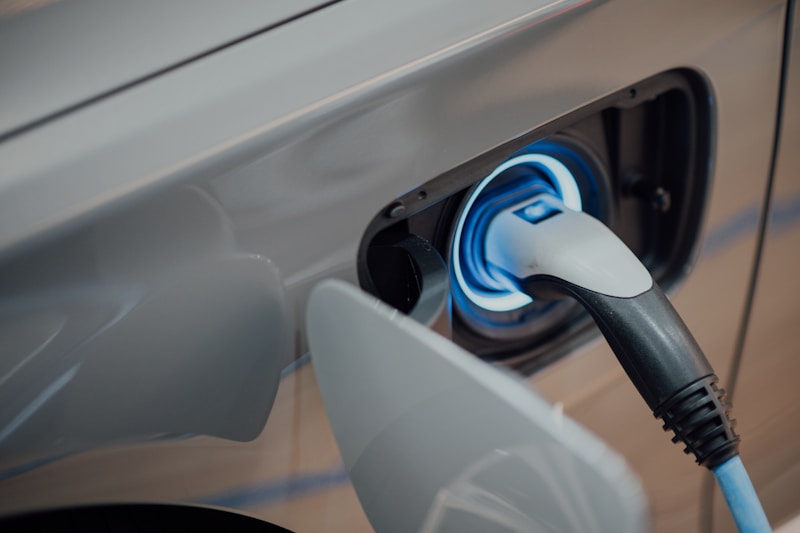 |
| Electric vehicles are rapidly transforming global transportation as sales reach record levels worldwide. (Image: Unsplash - Free to Use) |
Global EV Sales: Record Numbers and Market Trends
China continues to dominate the global electric vehicle market, accounting for approximately 60 percent of all EV sales worldwide. Chinese automakers such as BYD, which surpassed Tesla as the world's largest EV manufacturer by volume in 2024, NIO, Xpeng, and Li Auto have established themselves as formidable competitors in both domestic and international markets. BYD alone sold more than 3 million electric and plug-in hybrid vehicles in 2024, offering a diverse range of models from affordable compact cars priced under 15,000 dollars to premium luxury vehicles. Europe remains the second-largest EV market, with Norway leading the world in EV adoption rates, where more than 90 percent of all new cars sold are now electric. The European Union's strict emissions regulations, including effective bans on new internal combustion engine vehicle sales starting in 2035, are accelerating the transition across the continent. The United States EV market has also grown significantly, driven by federal tax credits, state-level incentives, and an expanding range of electric models from both traditional automakers like Ford, General Motors, and Volkswagen, and newer entrants like Rivian and Lucid. Emerging markets in Southeast Asia, Latin America, and Africa are beginning to see EV adoption as well, though from a much lower base, as affordable electric two-wheelers and three-wheelers gain popularity as cost-effective and clean transportation alternatives.
Battery Technology: The Heart of the EV Revolution
Battery technology is the single most critical factor determining the competitiveness and adoption rate of electric vehicles, and 2025 has brought significant advances in this area. The cost of lithium-ion battery packs has continued its remarkable decline, falling below 100 dollars per kilowatt-hour for the first time, a threshold long considered the point at which EVs achieve cost parity with internal combustion engine vehicles without subsidies. Energy density improvements mean that modern EV batteries can store more energy in less space and weight, enabling longer driving ranges that increasingly eliminate range anxiety as a barrier to adoption. Many new EV models now offer ranges exceeding 500 kilometers on a single charge, with some premium models surpassing 700 kilometers. Ultra-fast charging technology has also advanced significantly, with the latest chargers capable of adding hundreds of kilometers of range in just 15 to 20 minutes, approaching the convenience of refueling a gasoline vehicle. Beyond lithium-ion, several promising next-generation battery technologies are approaching commercialization. Solid-state batteries, which replace the liquid electrolyte in conventional lithium-ion batteries with a solid material, promise even higher energy density, faster charging, improved safety, and longer lifespan. Toyota, Samsung SDI, and several startups have announced plans to begin mass production of solid-state batteries within the next few years. Lithium iron phosphate (LFP) batteries, which use abundant and inexpensive materials, have become the dominant chemistry for affordable EVs, particularly in China, due to their lower cost, excellent safety profile, and long cycle life. Sodium-ion batteries, which use readily available sodium instead of lithium, are being commercialized as an even more affordable option for entry-level electric vehicles and energy storage applications.
Charging Infrastructure: Building the Network for an Electric Future
The expansion of charging infrastructure is essential to supporting the growing fleet of electric vehicles and addressing remaining concerns about charging access and convenience. Globally, the number of public charging points has exceeded 5 million, with China accounting for the majority. Governments around the world are investing heavily in charging infrastructure, with the United States deploying billions of dollars through the National Electric Vehicle Infrastructure program to build a nationwide network of fast chargers along major highways. The European Union has mandated the installation of fast charging stations at regular intervals along all major roads by the end of the decade. Private companies, including Tesla with its extensive Supercharger network, and charging network operators like ChargePoint, EVgo, and Ionity, are rapidly expanding their coverage. Home charging remains the primary method for most EV owners, with smart home chargers that can be programmed to charge vehicles during off-peak hours when electricity is cheapest and cleanest. Vehicle-to-grid technology, which allows EVs to feed stored energy back into the electrical grid during periods of peak demand, is being piloted in several countries, potentially transforming millions of electric vehicles into a distributed energy storage network that helps balance the grid and integrate renewable energy sources.
Challenges and the Road Ahead for Electric Vehicles
Despite the remarkable progress, several challenges remain in the transition to electric transportation. The supply chain for critical battery materials, including lithium, cobalt, nickel, and rare earth elements, faces potential bottlenecks as demand surges. Mining these materials raises environmental and social concerns, particularly in countries like the Democratic Republic of Congo, where cobalt mining has been linked to child labor and hazardous working conditions. Battery recycling infrastructure is still in its early stages and must be scaled up significantly to handle the growing volume of end-of-life EV batteries and recover valuable materials for reuse. The electricity grid in many regions will need significant upgrades to handle the increased demand from millions of charging vehicles. Affordability remains a barrier in many markets, as EVs still carry a price premium over comparable gasoline vehicles in some segments, though this gap is narrowing rapidly. The transition also has significant workforce implications, as the shift from complex internal combustion engines to simpler electric drivetrains requires fewer manufacturing workers, necessitating retraining and transition support programs. Despite these challenges, the direction of the transition is clear and irreversible, and the electric vehicle revolution will continue to reshape transportation, energy, and urban planning for decades to come.